
The Branch County Most Wanted Program
Branch County has no sheriff's most wanted page, full stop. The Sheriff's Office site covers its duties, jail and bond details, and forms, while its news link simply points to social media instead of a structured roster. That silence on the public website says nothing about whether warrants exist here, because they plainly can and do. When a county page is missing, the statewide program fills the gap: the Michigan State Police runs a tip lines page for Michigan's Most Wanted and the Crime Stoppers network. A tip program, though, holds no court files. For status on an actual warrant, the county warrant search channels are still the right door, since the court that issued the paper is the only place with the answer.
No Branch County Most-Wanted Roster Is Published
A missing page is just that. It does not mean Branch County has no active warrants, and it does not mean your search cleared anyone. Warrants sit in court dockets and law-enforcement systems, and both can be fully current while the public web shows nothing. So the practical move is a phone call rather than a scroll. Start with the court that issued the warrant; the county courts directory will get you to the right one, and the jail can answer booking or bond questions after that. The active warrants reference walks through each of those channels in turn, so nothing gets skipped.
How the Lists Work
Where a most wanted list does exist, remember what it is: a curated subset. An agency picks a handful of cases to publicize, usually the ones a tip might crack, and leaves the rest unlisted. The full set of outstanding warrants in Branch County would be far larger than any page shows, and most of it is never published anywhere. That selection is why a list can never work as a complete warrant check. Entries also lag. A person may already be in custody, or a judge may have recalled the warrant, while the page still carries the old item. Republished copies of these lists go stale even faster than the originals do.
Why a Most-Wanted Page Is Not a Branch Warrant Record
A most wanted profile is an appeal, not a court document. It is built to draw tips, so it carries far less than the file itself: no docket entries, no bond terms, no hearing dates, no recall information. The court record is the record. For status, appearance, bond, or recall details on a Branch County case, the issuing court is the only source that counts. A profile invites you to help; it cannot substitute for the docket, and it cannot tell you where a case stands today. Note: A program page can be current for tips and stale for status at the same time, so confirm each separately.
How to Report a Tip Safely
Tips go to the program, not to a webpage comment or a social post. The Michigan State Police lists two numbers on its tip lines page: Michigan's Most Wanted at 1-877-445-8477 and Crime Stoppers of Michigan at 1-800-773-2587, and both take information about cases a program has publicized. Give only what you truly know. A location, a vehicle, or a time of day helps. Never approach anyone yourself, and do not try to confirm a warrant before calling. Branch County callers can use either line the same way.
Key Point: Emergencies go to 911. The tip lines are for information about a program case, and a caller can ask about anonymity and any reward before giving details.
Crime Stoppers Tips vs Branch Warrant Records
Crime Stoppers of Michigan is a separate nonprofit that works with law enforcement and pays rewards for useful information. It is not a county office, and it holds none of Branch County's warrants, so a call there opens a tip file rather than a records check. Both programs publish their contact numbers on the statewide tip lines page.
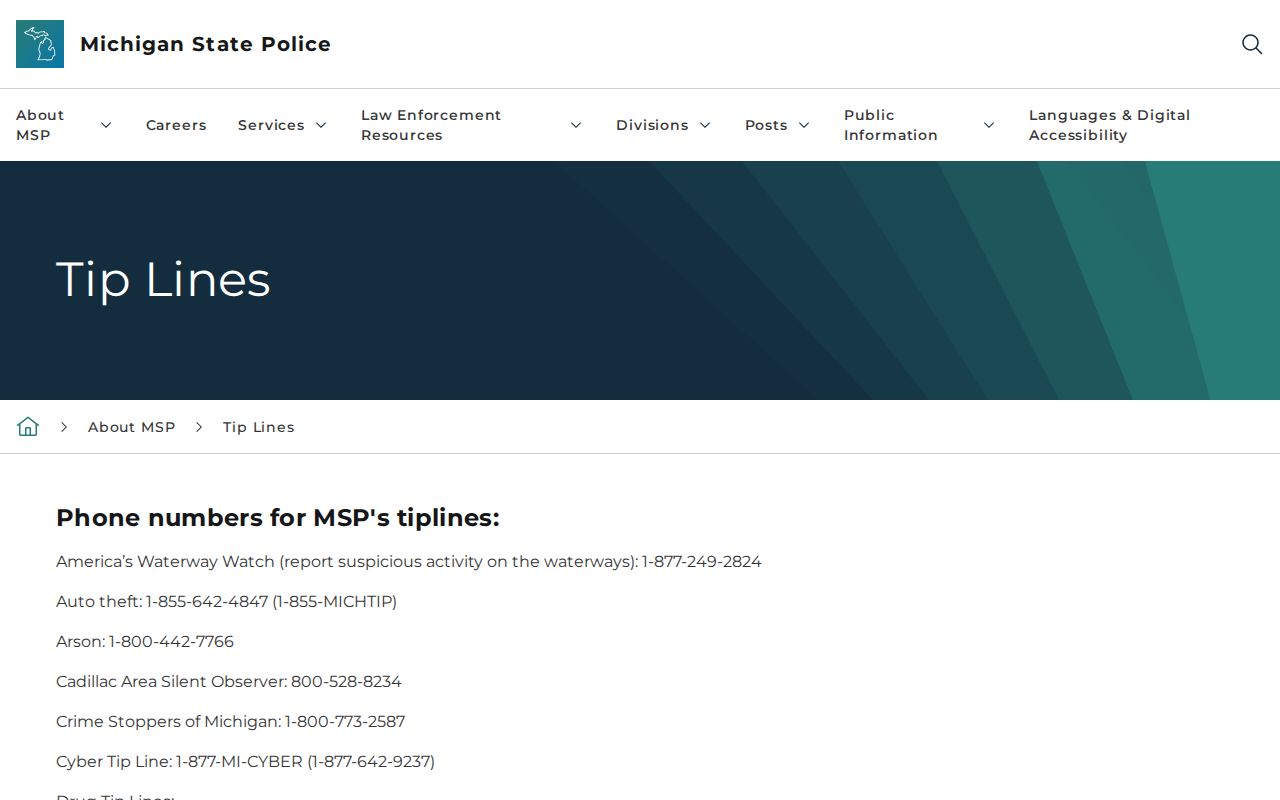
The banner there is a program notice naming no individuals, which is how a public Branch County most wanted reference should look.
Most Wanted vs an Active Warrant
People use the two terms as if they matched. They do not, and the difference decides where Branch County residents go for an answer.
| Question | Most Wanted Entry | Active Warrant Record |
|---|---|---|
| What it is | A public appeal for tips on a selected case | A court status on one specific case |
| Who publishes it | An agency or a tip program | The court that issued it |
| How complete | A small curated subset | Full case status, not published as a list |
| How current | On the agency's own schedule | Changes on recall or execution |
| Where to confirm | The program, for tip purposes | The issuing court clerk |
No Branch County Amnesty or Warrant Roundup Was Located
Some counties hold amnesty weeks or warrant roundups where people with open cases can appear on set terms. Branch County runs no such program, and no county page announces one. What exists instead is a standing rule. Michigan Court Rule 6.105 gives a person wanted on a warrant a way to appear voluntarily at the issuing court. Ask that court whether your case can be handled that way instead of waiting on an event that may never come.
If You Believe You Are on a List
If you think a Branch County list carries your name, do not sort it out at a police station or a posted address. Get a lawyer on the phone first. How you turn yourself in can shape the bond and release conditions you face. After that, verify the real status with the court that issued the warrant. A program page can sit stale for months. The issuing court alone can say whether the warrant is active, what appearance or bond it demands, and which step removes it from the docket.
Act Promptly: An active warrant does not expire on its own. Contact a Michigan attorney and the issuing court, and do not rely on a list entry to tell you where the case stands.
Emergency Calls and Routine Branch Warrant Questions
Branch County Central Dispatch takes the 24-hour emergency line, and it is not a records desk. Warrant questions of the routine kind belong with the court offices holding the files. The Sheriff's Office handles booking and bond questions, but it cannot recall a warrant. So keep the two apart. Dial 911 for an emergency. For a status question, call the clerk or the issuing court during business hours, where staff can read the docket and tell you exactly what is on it.